Trademark Class 4: Complete Guide to Trademark Registration for Oils, Lubricants, Fuels, Greases & Candles in India
If your business deals in industrial oils, lubricants, fuels, greases, candles, waxes, or related products, choosing the correct trademark class is essential for securing your brand identity. Trademark Class 4 is one of the most important classes for businesses operating in the energy, automotive, industrial manufacturing, petroleum, lubricant, and lighting sectors.
Many business owners file trademark applications without understanding the correct classification system. A wrong trademark class can lead to objections, limitations in protection, or even rejection of the application. Therefore, understanding Trademark Class 4 is crucial before filing a trademark registration application in India.
According to the Nice Classification system followed by the Indian Trademark Registry, Trademark Class 4 Registration covers industrial oils and greases, lubricants, fuels, illuminants, candles, and wicks for lighting.
In this detailed guide, we will cover everything about Trademark Class 4, including products covered, exclusions, examples, trademark registration process, government fees, benefits, and how Legal Hub India can help protect your brand. Also check the complete list of trademark classes for business.
What is Trademark Class 4?
Trademark Class 4 is a category under the Nice Classification system that primarily covers:
- Industrial oils
- Industrial greases
- Lubricants
- Fuels
- Biofuels
- Petroleum products
- Illuminants
- Candles
- Waxes
- Lighting wicks
This class mainly includes products used for industrial operations, machinery maintenance, energy generation, combustion, and lighting purposes.
Trademark Class 4 Description
Trademark Class 4 includes:
Industrial oils and greases; lubricants; dust absorbing, wetting and binding compositions; fuels and illuminants; candles and wicks for lighting.
Why Trademark Registration in Class 4 is Important?
The fuel, lubricant, petroleum, and industrial oil industries are highly competitive markets where brand recognition plays a major role.
Trademark registration helps businesses:
1. Protect Brand Identity
A registered trademark prevents competitors from using similar names, logos, or branding.
2. Build Customer Trust
Customers often associate lubricants, fuels, engine oils, and industrial products with quality and reliability.
3. Obtain Legal Rights
Trademark registration grants exclusive rights to use the mark within Class 4 goods.
4. Prevent Counterfeiting
Counterfeit engine oils, lubricants, and fuels are common in the market. A registered trademark helps enforce legal action against infringers.
5. Increase Business Value
A registered trademark becomes an intellectual property asset that can be licensed, franchised, sold, or transferred.
Who Should Register Under Trademark Class 4?
Trademark Class 4 is suitable for:
- Lubricant manufacturers
- Engine oil companies
- Petroleum product businesses
- Diesel suppliers
- Fuel distributors
- Biofuel manufacturers
- Industrial grease manufacturers
- Automotive oil brands
- Industrial wax manufacturers
- Candle manufacturers
- Paraffin wax companies
- Lighting product manufacturers
- Industrial fuel suppliers
- Gas fuel companies
- Coal suppliers
- Energy companies
If your products involve lubrication, combustion, energy production, or lighting, Class 4 is generally the appropriate trademark class.
List of Products Covered Under Trademark Class 4
“Trademark Class 4 goods list”
Below is a comprehensive list of products generally covered under Class 4.
Industrial Oils
- Industrial oils
- Machine oils
- Hydraulic oils
- Lubricating oils
- Cutting oils
- Transmission oils
- Compressor oils
- Turbine oils
- Gear oils
Industrial Greases
- Lubricating greases
- Industrial greases
- Automotive greases
- Bearing greases
- Multipurpose greases
Lubricants
- Vehicle lubricants
- Industrial lubricants
- Machinery lubricants
- Synthetic lubricants
- Automotive lubricants
Fuel Products
- Petrol
- Gasoline
- Diesel
- Kerosene
- Biofuels
- Ethanol fuel
- Solid fuels
- Coal
- Charcoal
- Biomass fuel
- Wood fuel
- Aviation fuel
Petroleum Products
- Petroleum
- Petroleum jelly for industrial purposes
- Petroleum ether
- Crude oil derivatives
Wax Products
- Industrial wax
- Raw wax
- Beeswax
- Paraffin wax
- Belting wax
Candles
- Decorative candles
- Soy candles
- Scented candles
- Religious candles
- Emergency candles
Lighting Products
- Wicks for candles
- Lamp fuel
- Illuminants
Fuel Additives
- Non-chemical fuel additives
- Motor fuel additives
Other Class 4 Goods
- Electrical energy
- Dust absorbing compositions
- Wetting compositions
- Binding compositions
- Leather preservation oils
- Masonry preservation oils
These products are specifically recognized within Class 4 under the Nice Classification framework.
Examples of Famous Brands Registered in Class 4
Many globally recognized companies protect their brands under Trademark Class 4.
Examples include:
- Castrol
- Shell
- BP
- Indian Oil
- Bharat Petroleum
- Hindustan Petroleum
- Mobil
- Gulf
- Total Energies
- Servo
These companies rely heavily on trademark protection because brand reputation directly impacts customer purchasing decisions.
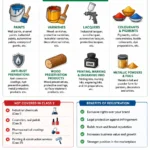
Products Not Covered Under Trademark Class 4
One of the biggest mistakes applicants make is filing products in the wrong trademark class.
Certain oil and wax-related products are NOT included in Class 4.
Class 1
- Industrial chemical oils
- Tanning oils
- Certain chemical additives
Class 2
- Anti-rust oils
- Wood preservation oils
Class 3
- Essential oils
- Cosmetic oils
- Perfumed oils
- Massage candles for cosmetic purposes
- Polishing wax
- Depilatory wax
Class 5
- Medicated candles
- Medical wax products
Class 29
- Edible oils
- Cooking oils
- Food-grade fats
The classification depends on the purpose and usage of the product rather than its physical appearance.
Trademark Class 4 and Related Trademark Classes
Businesses often need multi-class trademark registration.
Class 1
Industrial chemicals and chemical additives.
Class 2
Paints, varnishes, anti-rust preparations.
Class 3
Automobile cleaning products, polish, and essential oils.
Class 7
Machines and machine parts.
Class 9
Batteries, electrical equipment, energy-related devices.
Class 29
Edible oils and fats.
A lubricant manufacturer may need protection in Class 4 for lubricants and Class 3 for vehicle cleaning products.
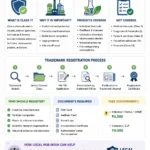
How to Register a Trademark Under Class 4 in India
Step 1: Conduct Trademark Search
Before filing, search the Trademark Registry database to ensure that the proposed trademark is available.
Step 2: Select the Correct Class
Choose Trademark Class 4 if your products fall under fuels, oils, greases, lubricants, waxes, or candles.
Step 3: Prepare Documents
Required documents include:
- Applicant name
- Address proof
- Business registration documents
- Logo (if applicable)
- User affidavit (if trademark already in use)
Step 4: File TM-A Application
The application is filed online through the Indian Trademark Registry.
Step 5: Examination
The Trademark Examiner reviews the application and may raise objections if required.
Step 6: Publication
The trademark is advertised in the Trademark Journal.
Step 7: Registration Certificate
If no opposition is filed, the trademark proceeds to registration.
Government Fees for Trademark Class 4 Registration
The government fee depends on the applicant category.
Individual / Startup / MSME
- ₹4,500 per class (online filing)
Company / LLP / Partnership
- ₹9,000 per class
Professional charges may be additional depending upon the consultant or trademark attorney engaged.
Common Trademark Objections in Class 4
Many trademark applications receive objections because of:
Similar Existing Marks
Names resembling existing lubricant or fuel brands often face objections.
Descriptive Words
Terms like:
- Super Lubricant
- Premium Oil
- Best Fuel
may be considered descriptive and weak.
Generic Industry Terms
Using purely generic industry terminology can reduce registration chances.
Incorrect Classification
Selecting the wrong class is a major reason for examination issues.
Conducting a proper trademark search before filing significantly reduces risks.
Benefits of Trademark Registration for Lubricant and Fuel Companies
Exclusive Ownership
You gain exclusive rights over the trademark.
Nationwide Protection
Protection extends across India.
Legal Enforcement
You can initiate infringement proceedings against unauthorized users.
Brand Recognition
A registered trademark enhances market credibility.
Franchise and Licensing Opportunities
The trademark becomes a valuable commercial asset.
Long-Term Protection
Trademark registration remains valid for 10 years and can be renewed indefinitely.
What Products Are Covered Under Trademark Class 4?
Many business owners search for terms such as “engine oil trademark class,” “lubricants trademark class,” “fuel trademark class,” and “trademark class for petroleum products” before filing a trademark application. Under the Nice Classification system, Trademark Class 4 covers a wide range of industrial oils, lubricants, fuels, greases, waxes, and lighting products.
If you manufacture or sell engine oil, hydraulic oil, industrial lubricants, diesel, petrol, kerosene, biofuels, candles, paraffin wax, or petroleum products, you should generally file your trademark application under Trademark Class 4.
Trademark Class for Lubricants and Engine Oils
One of the most common trademark-related searches is “What is the trademark class for lubricants?” The answer is Trademark Class 4.
This class covers:
- Automotive lubricants
- Industrial lubricants
- Machinery lubricants
- Synthetic lubricants
- Engine oils
- Gear oils
- Hydraulic oils
Businesses operating in the automotive and industrial sectors should register their brands under Trademark Class 4 to obtain legal protection against unauthorized use.
Trademark Class for Fuel and Petroleum Products
Another frequently searched query is “Which trademark class covers fuel products?”
Trademark Class 4 covers various fuel products including:
- Petrol
- Diesel
- Gasoline
- Aviation fuel
- Biofuel
- Coal
- Charcoal
- Kerosene
Therefore, if you are operating a fuel distribution business or petroleum trading company, Trademark Class 4 is the appropriate class for trademark registration.
Trademark Class for Candles and Wax Products
Many candle manufacturers search for “trademark class for candles” or “trademark class for wax products.”
Class 4 includes:
- Scented candles
- Decorative candles
- Religious candles
- Soy candles
- Paraffin wax
- Industrial wax
- Beeswax
- Candle wicks
Registering your candle brand under Trademark Class 4 helps protect your product identity in a competitive market.
Why Choose Legal Hub India for Trademark Class 4 Registration?
At Legal Hub India, we help businesses secure and protect their trademarks through a streamlined registration process.
Our services include:
- Comprehensive trademark search
- Trademark availability analysis
- Class identification
- TM-A filing
- Objection handling
- Opposition management
- Trademark renewal services
- Brand protection consultation
Whether you manufacture engine oils, industrial lubricants, petroleum products, fuels, waxes, or candles, our team ensures that your trademark application is filed under the correct class with maximum legal protection.
Frequently Asked Questions (FAQs)
What is Trademark Class 4?
Trademark Class 4 covers industrial oils, greases, lubricants, fuels, illuminants, candles, waxes, and wicks for lighting.
Is engine oil covered under Trademark Class 4?
Yes. Engine oil, transmission oil, hydraulic oil, and lubricating oil fall under Trademark Class 4.
Which trademark class covers candles?
Candles and candle wicks are covered under Trademark Class 4.
Is diesel included in Class 4?
Yes. Diesel, petrol, gasoline, kerosene, and similar fuels are covered under Trademark Class 4.
Are edible oils included in Class 4?
No. Edible oils generally fall under Trademark Class 29.
How long is a trademark valid?
A registered trademark remains valid for 10 years and can be renewed indefinitely.
Conclusion
Trademark Class 4 is the designated class for industrial oils, greases, lubricants, fuels, waxes, candles, illuminants, and related products. Businesses operating in the petroleum, automotive, industrial manufacturing, energy, lubricant, and lighting sectors should secure trademark protection under this class to safeguard their brand identity and prevent infringement.
With increasing competition in the fuel and lubricant industry, trademark registration is no longer optional—it is a strategic business asset. Filing under the correct trademark class ensures stronger legal protection, brand recognition, customer trust, and long-term commercial value.
If you are planning to register a trademark for lubricants, engine oils, fuels, petroleum products, industrial waxes, or candles, Legal Hub India can assist you throughout the process with professional trademark filing and protection services.